Torre de Belém - Kiedyś wieża ta stała na środku rzeki Tag. Był tutaj magazyn broni i więzienie. W czasach wielkich odkryć geograficznych wieża pełniła nie tylko funkcje militarne ale również była punktem orientacyjnym dla wracających do ojczyzny żeglarzy i symbolem morskiej potęgi Portugalii.
***
Torre de Belém – This tower once stood in the middle of the river Tagus. There was placed an armory storage and prison. In times of great geographical discoveries the tower had not only military significance but also was a landmark for sailors returning to their homeland as well as a symbol of Portugal's marine power.
Obecnie widać jak rzeka wysycha bo budowla znajduje się praktycznie na brzegu. To również może być spowodowane tym, że po już wspominanym trzęsieniu ziemi w 1755r. rzeka nieco zmieniła koryto.
Jest ona przepięknym dziełem wykonanym w stylu manuelińskim. W 1983r. została wpisana na listę światowego dziedzictwa UNESCO.
***
Currently, you can see how the river dries up because the building is located practically on the shore. It also may be due to the earthquake in 1755 that was mentioned in previous posts. River channel has changed somewhat since that event.
It is a beautiful work made in the manueline style. Since 1983 is on the UNESCO World Heritage Site.
Tutaj jeszcze zamieściłam kilka fotek ze środka wieży.
Ludzie w tamtych czasach musieli być dużo niżsi od nas teraz.
Enjoy :D
***
I placed here as well some pix from the inside of the tower.
People in those days had to be a lot shorter than us nowadays.
Enjoy :D
wtorek, 11 czerwca 2013
piątek, 7 czerwca 2013
Memories of EURO 2012
I pomyśleć, że 8 czerwca zeszłego roku odbyły się w Polsce i na Ukrainie mistrzostwa Europy – Euro 2012.
Był to niesamowity okres świętowania i wzajemnej życzliwości w mieście. Normalnie rzadko się widuje takiego zjednoczonego ducha na ulicach Warszawy [oczywiście były pewne incydenty ale po co o tym wspominać].
Wspaniały czas :D
***
Time passes by but the great memories are still in the back of my head. Last year on 8th, June took place in Poland and Ukraine EURO 2012.
It was an amazing time of celebration and kindness in the city. Normally rarely seen such a unified spirit in the streets of Warsaw [of course there were some incidents but it’s not worth to mention it].
A really wonderful time: D
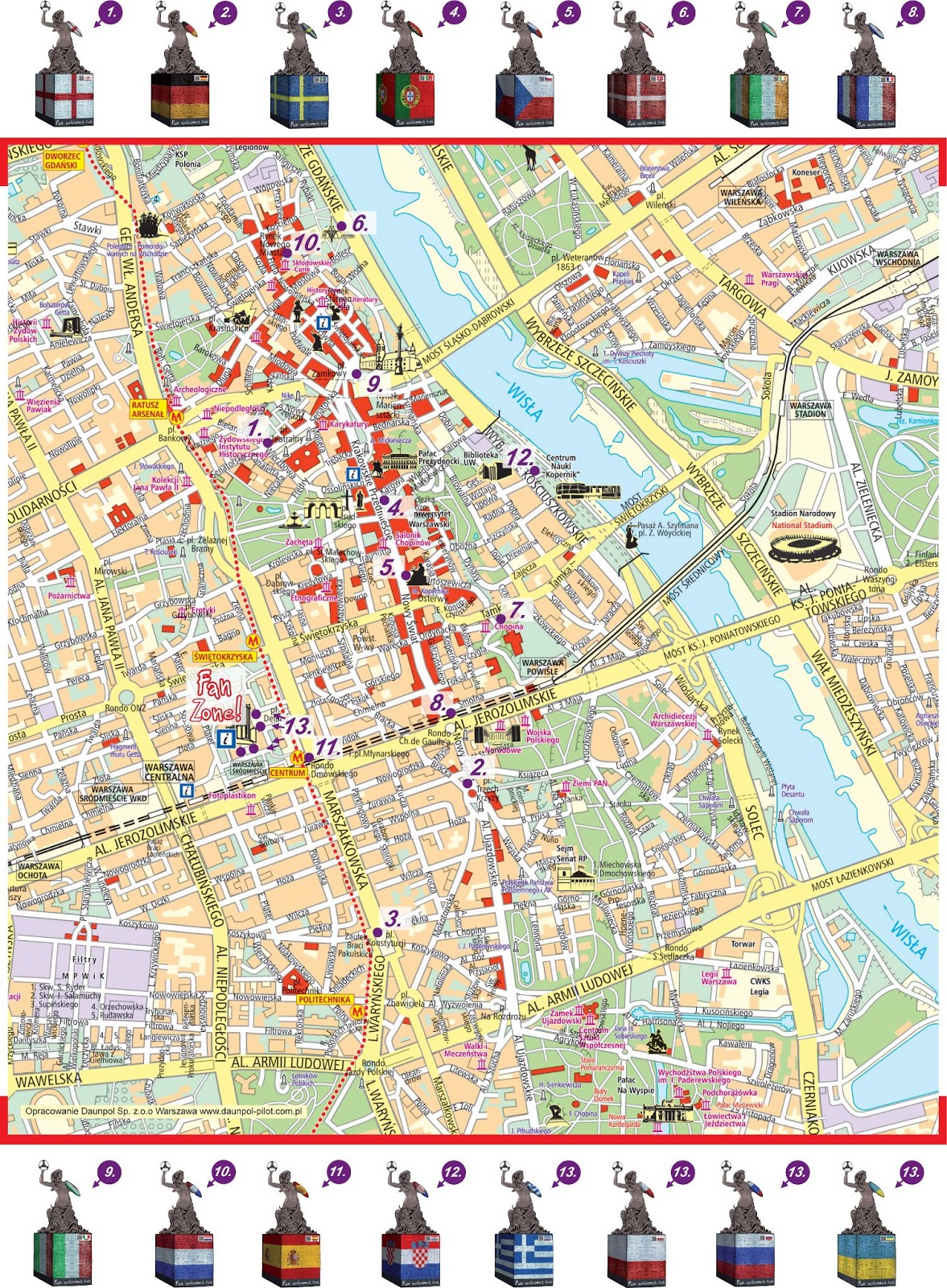
Z okazji Euro w centrum pojawiły się syrenki. Jak wiadomo syrenka jest symbolem stolicy więc i ona wzięła czynny udział w tym widowisku. Pewnej czerwcowej gorącej soboty wybraliśmy się na polowanie na syrenki. Ponad 20 km piechotą po Warszawie w niesamowity upał – ale było warto!!
Relację ze spaceru umieścił Mateusz na swoim blogu. Zapraszam do lektury :)
***
On this occasion in the city center appeared colorful mermaids. As you know the mermaid is a symbol of the capital so she took an active part in the spectacle. One hot June Saturday we went on the hunt for all mermaids. More than 20 km of walk around Warsaw in incredible heat – but it was worth it!!
A friend of mine post a whole report of this event on his blog. I invite you to read it [only in Polish..] :)
wtorek, 4 czerwca 2013
XII - Lisbon - Belém - Monument of Geographic Explorers
Parkiem obok klasztoru dotarłyśmy do Pomnika Odkrywców Geograficznych – Padrão dos Descobrimentos. Obecny pomnik (wcześniej stała tam prowizoryczna konstrukcja) oficjalnie odsłonięto w tym miejscu w 1960r., czyli w 500-setną rocznicę śmierci Henryka Żeglarza.
***
Park next to the monastery has some gems as well. The most interesting is the Monument of Geographic Explorers – Padrão dos Descobrimentos. The current monument (previously there was a makeshift structure) officially was placed here in 1960, that means in the 500-years anniversary of the death of Henry the Navigator.
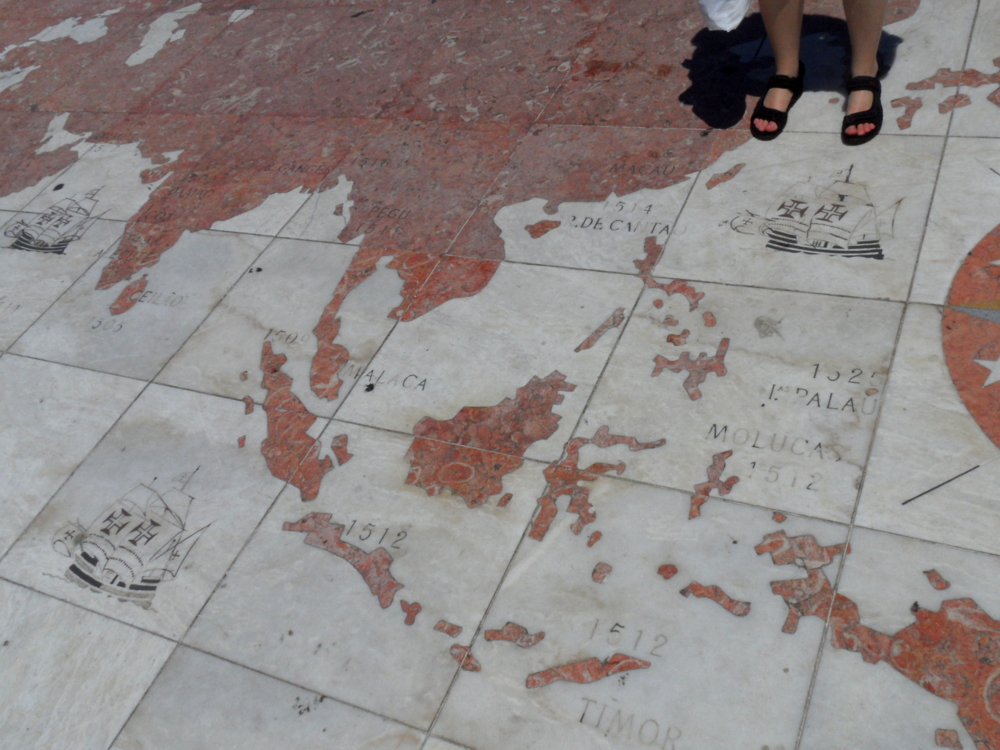
Przed pomnikiem znajduje się ułożony na ziemi wielki kompas – marmurowa mozaika – z mapą świata, datami i trasami podróży portugalskich odkrywców. Co ciekawe została ona podarowana Lizbonie przez RPA.
***
In the front of the monument was placed on the ground huge compass – marble mosaic – with a world map, travel dates and routes of the Portuguese discoveries. Interestingly, it was donated to Lisbon by Republic of South Africa.
***
Park next to the monastery has some gems as well. The most interesting is the Monument of Geographic Explorers – Padrão dos Descobrimentos. The current monument (previously there was a makeshift structure) officially was placed here in 1960, that means in the 500-years anniversary of the death of Henry the Navigator.
Przed pomnikiem znajduje się ułożony na ziemi wielki kompas – marmurowa mozaika – z mapą świata, datami i trasami podróży portugalskich odkrywców. Co ciekawe została ona podarowana Lizbonie przez RPA.
***
In the front of the monument was placed on the ground huge compass – marble mosaic – with a world map, travel dates and routes of the Portuguese discoveries. Interestingly, it was donated to Lisbon by Republic of South Africa.
wtorek, 28 maja 2013
XI - Lisbon - Belém - Jeronimos Monastery
Naszą uwagę przykuł niesamowity Klasztor Hieronimitów – Mosteiro dos Jerónimos. Został on postawiony na początku XVI wieku w ramach podziękowania za owocną wyprawę Vasco da Gamy i odkrycie morskiej drogi do Indii. Klasztor tak jak Igreja de Santa Engracia również pełni rolę Panteonu Narodowego; pochowano w nim między innymi: Vasco da Gamę, Luísa de Camões czy też Fernando Pessoę.
Klasztor Hieronimitów jest wpisany na listę światowego dziedzictwa UNESCO.
***
The most incredible thing in Belém is Jeronimos Monastery – Mosteiro dos Jerónimos. It was built at the beginning of XVI century as a way of saying thank you to the Vasco da Gama and his crew who discovered a new sea route to India. Monastery as well as Igreja de Santa Engracia is the National Pantheon. There were buried among others: Vasco da Gama, Luís de Camões and Fernando Pessoa.
Jeronimos Monastery is on the list of UNESCO World Heritage Site.
Niestety próbowałyśmy tam wejść kilka razy ale bezskutecznie; a bo to duża kolejka, a bo za intensywne słońce aby w taki upał tyle czekać lub święto czy też w poniedziałki mają zamknięte [tak próbowałyśmy kilka razy :/]
Klasztor jest fenomenalny. Trochę przypomina katedrę mediolańską.
***
Unfortunately we tried to get on several times but no luck.. reasons: really long queue, sun is too strong, bank holiday and it’s closed on Mondays [yes we tried to do that for a couple of times]
The monastery is phenomenal. A bit like the Milan cathedral. Definitely a must if you are in Lisbon.
wtorek, 21 maja 2013
X - Lisbon - Belém - Portuguese traditional cookies - Pastéis de nata :D
Belém – tak właściwie pełna nazwa to Santa Maria de Belém. Przez niektórych uważana za odrębny rejon ale tak naprawdę jest to dzielnica Lizbony. Za czasów świetności Portugalii kolonialnej był to główny port stolicy kraju.
Zaczęłyśmy zwiedzanie od cukierni!
Trzeba było się posilić Pastéis de Belém, które poza Belém nazywają się po prostu śmietankowe Pastéis de nata :)
***
Belém – actually, the full name is Santa Maria de Belém. For some people thou is considered as a separate town but to be true is a district of Lisbon. In the Portuguese colonial heydays it was the main city port of the country.
We started exploring from pastries tasting!
Pastéis de Belém are delicious and the funny fact is that outside of the district they have a different name: creamy Pastéis de Nata :)
wtorek, 14 maja 2013
IX - Lisbon - Bario Alto - Basílica da Estrela
Zbliżając się do końca popołudniowej wycieczki pomaszerowałyśmy do Basílica da Estrela. Ma ona najlepiej widoczną kopułę w panoramie Lizbony. Zbudowana została jako wotum wdzięczności królowej Marii I za poczęcie syna Józefa I następcę tronu.
Bazylika zbudowana w roku 1790 w stylu barokowym i neoklasycystycznym.
Warto zwrócić uwagę na trójkolorowy marmur na posadce i ścianach – szary, różowy i żółty.
W głębi kościoła można również obejrzeć grób królowej Marii I.
***
It was getting late so we were about to finish sightseeing for today.. and then we arrived at the beautiful thing – Basílica da Estrela. It’s not that far from the parliament from the previous post – like 10 minutes of walking more. Its dome is the most visible piece in Lisbon panorama. Basilica was built as a thanksgiving offering of the Queen Mary I who conceive a son – Joseph I – heir to the throne.
Basilica was built in 1790 in baroque and neoclassical styles.
Note the tri-color marble on the floor and walls – gray, pink and yellow. Inside the church, you can also see the tomb of Queen Mary I.
Po drugiej stronie bazyliki zaś znajduje się Jardim da Estrela. Przepiękny ogród z mnóstwem rzeźb, kafejek i altanek. Spędziłyśmy tu chyba ze 2 lub nawet 3 godziny najpierw na zasłużonej kawie po całym dniu spacerów a potem na ławeczce słuchając orkiestry grającej bardzo znane utwory radiowe. Ciekawe doświadczenie :)
***
On the other side of the basilica is the Jardim da Estrela. The beautiful garden with lots of sculptures, cafes and arbours. I think we spent there like 2 or even 3 hours firstly on a well – deserved cup of coffee after a long day of walking and then on a bench listening to the orchestra playing well known radio songs. Interesting experience :)
wtorek, 7 maja 2013
VIII - Lisbon - Bario Alto - Palace of São Bento
Począwszy od kościoła São Roque przeszłyśmy się ulicami Barrio Alto aż dotarłyśmy do Palácio de São Bento, w którym to znajduje się Parlament Portugalski. Wielki, monumentalny, biały budynek z ogromną ilością schodów i dwoma lwami pilnującymi wejścia. Wcześniej stał tu klasztor benedyktyński pod tym samym wezwaniem.
***
After passing by the church of São Roque we went for a walk on the streets of the Barrio Alto district until we saw the palace – Palácio de São Bento, where right now you can find the Portuguese Parliament. Huge, monumental, white building with loads of stairs and two lions guarding the entrance. Previously, there was a Benedictine monastery in this place, which had the same name.
Strażnicy jednak nie stali na baczność przy bramach wejściowych a gawędzili sobie w jak lepsze – może dlatego, że to przy sobocie :) Obok parlamentu jest bardzo ładny ogród – Jardim de São Bento, którym na pewno warto się przejść!
***
The guards, however, were not standing straight and guarding the entrance gates, they were chatting the whole time we were there.. but well it was Saturday :)
Next to the parliament is a very nice garden – Jardim de São Bento which is definitely worth a visit!
Subskrybuj:
Posty (Atom)