Kolejny dzień zwiedzania Alfamy. Pierwszym punktem na naszej liście była Katedra Sé. Kiedyś stał tu meczet potem wybudowano katedrę, która się 3 razy zawalała przez trzęsienia ziemi. Katedra wygląda surowo ale ujmująco. Ściętymi wieżami przypomina Katedrę Notre Dame z Paryża.
***
Another day of exploring the Alfama gems. The first point on our list was the Sé Cathedral. Mosque stood here once, then the cathedral was built and was demolished later on 3 times because of earthquakes. Cathedral looks pretty austere but charmingly. The sloping towers look like those of Notre Dame in Paris.
Potem uliczkami przeszliśmy żeby zwiedzić Miradouro i Igreja da Graça. Jest to dziedzictwo zakonu Augustynów. Tutaj szczególnie warto zwrócić uwagę na azulejos na antepedium ołtarza, które imitują brokatowe tkaniny.
***
The next step of our trip was to explore Miradouro and Igreja da Graça. It is a legacy of the order of St. Augustine. You should pay particular attention to the frontal azulejos which mimic brocade fabric.
wtorek, 26 marca 2013
wtorek, 19 marca 2013
I - Lisbon - Alfama - National Pantheon
Alfama – najbiedniejsza ale i jednocześnie najstarsza dzielnica Lizbony, do której podobno bardzo niebezpiecznie jest się zapuszczać w nocy. Warto jednak podkreślić, że jako jedyna przetrwała ona w stanie prawie nie naruszonym wielkie trzęsienie ziemi z 1755 r.
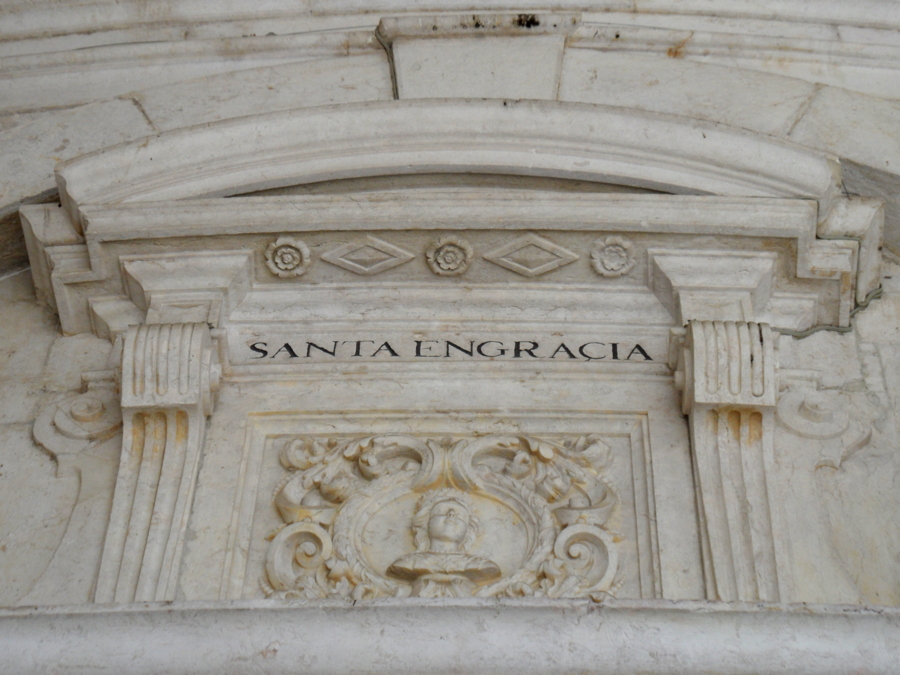
Oprócz wszechogarniającego widza ubóstwa, Alfama kryje w sobie także perełki architektury i historii Portugalii. Tutaj mieliśmy okazję podziwiać kościół Igreja de Santa Engracia. Obecnie jest to majestatyczny Panteon Narodowy.
***
Alfama – the poorest but also the oldest district of Lisbon, which apparently is a very dangerous place at night. It’s worth emphasizing that it is the only district of the city which survived, almost intact the great earthquake of 1755.
Apart from overwhelming poverty Alfama hides the gems of architecture and history of Portugal. Here we had the opportunity to admire the church Igreja de Santa Engracia. Today it has also a function of majestic National Pantheon.
Jest on jednym z najwspanialszych zabytków Lizbony. Wszystkie prace wykończeniowe zostały tak naprawdę ukończone dopiero w 1966 r., ale już w 1916 podjęto decyzję o zrobieniu z tej świątyni Narodowego Panteonu – Panteao Nacional. Teraz można tam zwiedzać grobowce wielu ważnych osobistości Portugalii.
***
It is one of the greatest monuments of Lisbon city. All finishing works were not really completed until 1966., but already in 1916 it was decided that Igreja de Santa Engracia will become the temple of the National Pantheon – Panteao Nacional. Currently you can visit the tombs of many important personalities from the history of Portugal.
Oprócz wszechogarniającego widza ubóstwa, Alfama kryje w sobie także perełki architektury i historii Portugalii. Tutaj mieliśmy okazję podziwiać kościół Igreja de Santa Engracia. Obecnie jest to majestatyczny Panteon Narodowy.
***
Alfama – the poorest but also the oldest district of Lisbon, which apparently is a very dangerous place at night. It’s worth emphasizing that it is the only district of the city which survived, almost intact the great earthquake of 1755.
Apart from overwhelming poverty Alfama hides the gems of architecture and history of Portugal. Here we had the opportunity to admire the church Igreja de Santa Engracia. Today it has also a function of majestic National Pantheon.
***
It is one of the greatest monuments of Lisbon city. All finishing works were not really completed until 1966., but already in 1916 it was decided that Igreja de Santa Engracia will become the temple of the National Pantheon – Panteao Nacional. Currently you can visit the tombs of many important personalities from the history of Portugal.
wtorek, 12 marca 2013
XII - Budapest - Gellért’s hill
Ostatni dzień pobytu w Budapeszcie... a właściwie nawet nie cały upłynął pod tytułem zdobywania wzgórza Gellérta. Najłatwiej chyba dojechać tam tramwajem nr 46.
Nie oszukujmy się... wspinaczka na sam szczyt zajęłam nam maksymalnie 20 minut, ale jestem przekonana, że można było to pokonać nawet w krótszym czasie :D
***
Last day in Budapest... we spent on Gellért’s hill. The easiest way to get there is by tram no 46.
Don’t fool yourself... climbing to the top took us up to 20 minutes, but I am sure that you could pull it off in less than that :D
Na samej górze stoi pomnik biskupa Gellérta. Według legendy to właśnie w tym miejscu podczas buntów pogańskich w 1046r. biskup zginął męczeńską śmiercią (część przekazów mówi o wrzuceniu go do beczki nabitej gwoździami a następnie zepchnięciu do rzeki).
Obok tego monumentalnego pomnika znajduje się również Cytadela.
***
At the top there is a statue of Bishop Gellért. According to the legend, this is the place were during the pagan revolts in 1046r. bishop was killed (some sources say that people back then threw him into a barrel studded with nails and then pushed into the river).
Next to the monumental statue is located the Citadel.
wtorek, 5 marca 2013
XI - Budapest - Great Synagogue
Erzsébetváros jest to dawna dzielnica żydowska Budapesztu. Wybrałyśmy się tam aby nacieszyć oczy wspaniałą Wielką Synagogą. W środku tej niezwyklej budowli znajduje się Muzeum Historii i Religii Żydowskiej.
***
Erzsébetváros is the old Jewish district of Budapest. We went there to admire the magnificent Great Synagogue. Inside this extraordinary building is the Museum of Jewish History and Religion.
Na tyłach za Synagogą znajduje się pomnik ku czci ofiar Holokaustu. Wygląda to bardziej na sztukę nowoczesną; mi osobiście kojarzy się z drzewem – płaczącą wierzbą.
***
At the back of the synagogue is a memorial to the victims of Holocaust. It looks like modern art; I personally associate it with the tree – weeping willow.
***
Erzsébetváros is the old Jewish district of Budapest. We went there to admire the magnificent Great Synagogue. Inside this extraordinary building is the Museum of Jewish History and Religion.
Na tyłach za Synagogą znajduje się pomnik ku czci ofiar Holokaustu. Wygląda to bardziej na sztukę nowoczesną; mi osobiście kojarzy się z drzewem – płaczącą wierzbą.
***
At the back of the synagogue is a memorial to the victims of Holocaust. It looks like modern art; I personally associate it with the tree – weeping willow.
wtorek, 26 lutego 2013
X - Budapest - Heroes' Square
Kolejnymi atrakcjami na Aleji Andrássyego jest Plac Bohaterów a na nim monumentalny pomnik Millenium, który w symboliczny sposób ukazuje 1000 lat dziejów państwa i narodu węgierskiego.
***
Other attraction on Andrássy Avenue is Heroes' Square with the Millennium monument, which symbolizes 1000 years of history of the Hungarian country and its nation.
Na 36cio-metrowej kolumnie w centralnej części placu stoi archanioł Gabriel. Według legendy przyśnił się on papieżowi by skłonić go do przekazania korony księciu madziarskiemu. Prostokątna płyta przed kolumną natomiast to Grób Nieznanego Żołnierza.
***
At 36meters high column in the center of the Square stands the archangel Gabriel. According to the legend, pope saw him in his dream and he persuade the pope to give back the crown to Hungarian prince. Rectangular plate in front of the column is the Tomb of Unknown Soldier.
Plac jest ogromny; po prawej stronie wznosi się największa hala wystawowa na Węgrzech a po lewej Muzeum Sztuk Pięknych.
Jak tam dotrzeć?
Wystarczy dojechać do końcowej stacji żółtej linii metra M1 – przystanek: Mexikói út.
***
The square is huge; on the right side is the largest exhibition hall in Hungary and left the Museum of Fine Arts.
How to get there?
Just go to the final station of the yellow subway line M1 - stop: Mexikói út.
***
Other attraction on Andrássy Avenue is Heroes' Square with the Millennium monument, which symbolizes 1000 years of history of the Hungarian country and its nation.
Na 36cio-metrowej kolumnie w centralnej części placu stoi archanioł Gabriel. Według legendy przyśnił się on papieżowi by skłonić go do przekazania korony księciu madziarskiemu. Prostokątna płyta przed kolumną natomiast to Grób Nieznanego Żołnierza.
***
At 36meters high column in the center of the Square stands the archangel Gabriel. According to the legend, pope saw him in his dream and he persuade the pope to give back the crown to Hungarian prince. Rectangular plate in front of the column is the Tomb of Unknown Soldier.
Plac jest ogromny; po prawej stronie wznosi się największa hala wystawowa na Węgrzech a po lewej Muzeum Sztuk Pięknych.
Jak tam dotrzeć?
Wystarczy dojechać do końcowej stacji żółtej linii metra M1 – przystanek: Mexikói út.
***
The square is huge; on the right side is the largest exhibition hall in Hungary and left the Museum of Fine Arts.
How to get there?
Just go to the final station of the yellow subway line M1 - stop: Mexikói út.
wtorek, 19 lutego 2013
IX - Budapest - House of Terror
Na większą uwagę na Aleji Andrássyego zasługuje Dom Terroru. Muzeum zostało tak zaprojektowane aby budziło grozę ale jednocześnie skłaniało do refleksji nad czasami, których dotyczy. Przypomina trochę nasze Muzeum Powstania Warszawskiego w Warszawie. W Budapeszcie aż roi się od plotek, że ta instytucja nie utrzyma się długo mimo, że cieszy się niesłabnącym zainteresowaniem.
Wynika to z faktu zainstalowania czarnej ramy „TERROR” na budynku, która od zawsze jest kością niezgody. Z założenia miało to na celu straszenie ludzi.... ech.... faktycznie budynek odbiega wyglądem [nawet bardzo!] od reszty alei ale uważam, że to było zamierzone i tak powinno zostać.
***
One of the most intriguing buildings on the Andrássy Avenue is the House of Terror. The museum was designed so that it would arouse the feeling of threat but also tend to reflect on the times that it presents. A bit like ours Warsaw Uprising Museum in Warsaw. Budapest is full of rumors that the institution won’t last for long even though it has a remarkable popularity.
This is because of the installation of a black frame "TERROR" on the building, which has always been a problem. At first the idea was to scare people.... eh.... building actually looks way different than any others on this avenue [really a lot!] but I think that it was intentional and it should stay that way.
Muzeum powinni zwiedzić zwłaszcza Ci którzy interesują się historią najnowszą. Jest to instytucja poświęcona dyktaturom XX wieku – faszystowskiej i komunistycznej. Wystawy głownie są poświęcone Nazistowskiemu Państwo Niemiec i Związkowi Radzieckiemu jednak można tam również znaleźć odwołania do węgierskiej organizacji faszystowskiej strzałokrzyżowców i komunistycznej policji ÁVH [coś na kształt sowieckiego KGB].
Budynek ten to właściwe miejsce na tego typu muzeum. W latach 1937 – 1944 służył za siedzibę i więzienie strzałokrzyżowców natomiast przez następne 11 lat był siedzibą i więzieniem wcześniej wspomnianej stalinowskiej policji politycznej ÁVH.
***
Those who are interested in recent history should definitely visit this museum. The institution presents the story of the dictatorships of the XX century – both the fascist and the communist one. Most exhibitors are about the Nazi Germany and the Soviet Union, however, you may also find Hungarian aspect of this which is fascist Arrow Cross Party and the communist police ÁVH [this organization was in a way similar to soviet KGB].
This building is the right place for such a museum. During the years 1937 – 1944 it was the headquarters and prison of Arrow Cross Party and for the next 11 years it was the headquarters and prison of the ÁVH Hungarian political police which was mentioned above.
wtorek, 12 lutego 2013
VIII - Budapest - Andrássy Avenue
Kolejny dzień zwiedzana rozpoczął się od Aleji Andrássyego – która w 2002r. za niecodzienną urodę została wpisana na Listę Światowego Dziedzictwa UNESCO. Jest w tym dużo prawdy. Cała dzielnica w jakiej ona się znajduje – Peszt – jest raczej charakteru przemysłowego, a ta aleja przypomina zakamarki Budy.
Naszą przygodę rozpoczęłyśmy od stacji metra żółtej linii M1 – Bajcsy – Zs. ut.
Jest to najstarsza w Europie wybudowana jako pierwsza na tym kontynencie linia metra.
***
The next day began with a tour around Andrássy Avenue – this place for its unusual beauty was signed in UNESCO World Heritage List in 2002. It’s really true. The whole district in which is located – Pest – is rather industrial and while walking around this avenue you feel like you are in Buda.
The stroll started from the subway stop of yellow line M1 – Bajcsy – Zs. ut.
This is the oldest subway line in Europe.
Idąc tą malowniczą ulicą widziałyśmy mnóstwo pięknych budowli, rzeźb itp. Na dłuższą chwilę zatrzymałyśmy się przy Teatrze Nowym i Operze, które stoją na przeciwko siebie po przeciwnych strachach alei.
***
While walking this picturesque avenue we saw a lot of beautiful buildings, statues, etc. The most interesting sites were the New Theatre and Opera House, which are located on the opposite sides of each other.
Subskrybuj:
Posty (Atom)